Retina
OVERVIEW
-
Types:Nearsightedness (myopia), farsightedness (hyperopia), astigmatism, presbyopia
-
Most Common Symptom:Blurred vision
-
Diagnosis:Eye exam
-
Treatment:Eyeglasses, contact lenses, surgery
CAUSES
- Eyeball length (when the eyeball grows too long or too short)
- Problems with the shape of the cornea (the clear outer layer of the eye)
- Aging of the lens (an inner part of the eye that is normally clear and helps the eye focus)
SYMPTOMS
If only a small part of your retina has detached, you may not have any symptoms.
But if more of your retina is detached, you may not be able to see as clearly as normal, and you may notice other sudden symptoms, including:
- A lot of new floaters (small dark spots or squiggly lines that float across your vision)
- Flashes of light in one eye or both eyes
- A dark shadow or “curtain” on the sides or in the middle of your field of vision
Retinal detachment is a medical emergency. If you have symptoms of a detached retina, it’s important to go to your eye doctor or the emergency room right away.
The symptoms of retinal detachment often come on quickly. If the retinal detachment isn’t treated right away, more of the retina can detach — which increases the risk of permanent vision loss or blindness.
TYPES
Rhegmatogenous Retinal Detachment
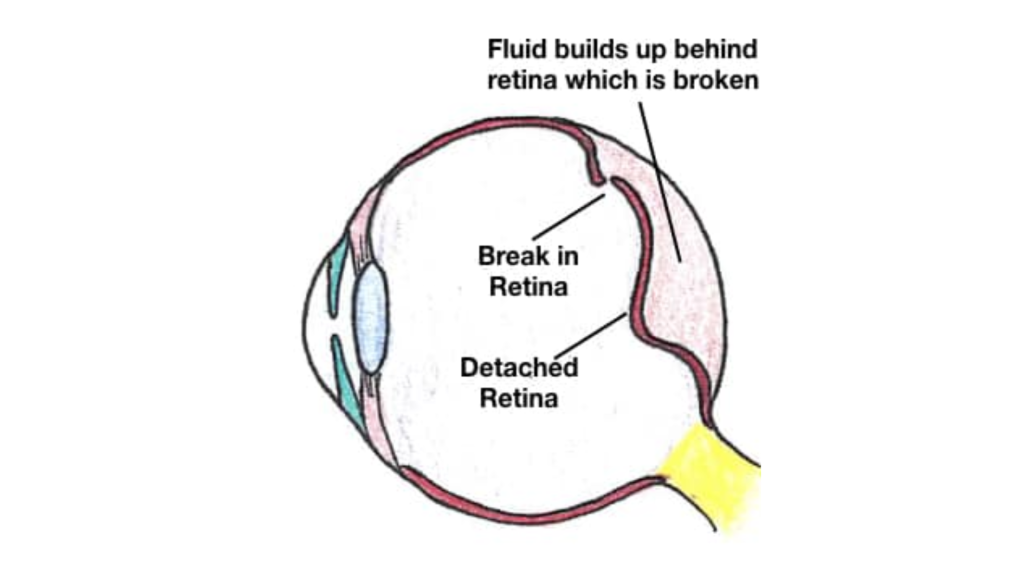
Rhegmatogenous retinal detachment is the most common type of retinal detachment. It can happen if you have a small tear or break in your retina.
When your retina has a tear or break, the gel-like fluid in the center of your eye (called vitreous) can get behind your retina. The vitreous then pushes your retina away from the back of your eye, causing it to detach.
What causes rhegmatogenous retinal detachment?
Aging is the most common cause of rhegmatogenous retinal detachment. As you get older, the vitreous in your eye may change in texture and may shrink. Sometimes, as it shrinks, the vitreous can pull on your retina and tear it.
Other things that can increase your risk of rhegmatogenous retinal detachment are eye injuries, eye surgery, and nearsightedness.
Tractional Retinal Detachment
What causes tractional retinal detachment?
The most common cause of tractional retinal detachment is diabetic retinopathy — an eye condition in people with diabetes. Diabetic retinopathy damages blood vessels in the retina and can scar your retina. As the scars get bigger, they can pull on your retina and detach it from the back of your eye.
If you have diabetes, it’s important to get a comprehensive dilated eye exam at least once a year. Managing your diabetes — by staying physically active, eating healthy foods, and taking your medicine — can also help you prevent or delay vision loss.
Other causes of tractional retinal detachment include eye diseases, eye infections, and swelling in the eye.

Exudative Retinal Detachment
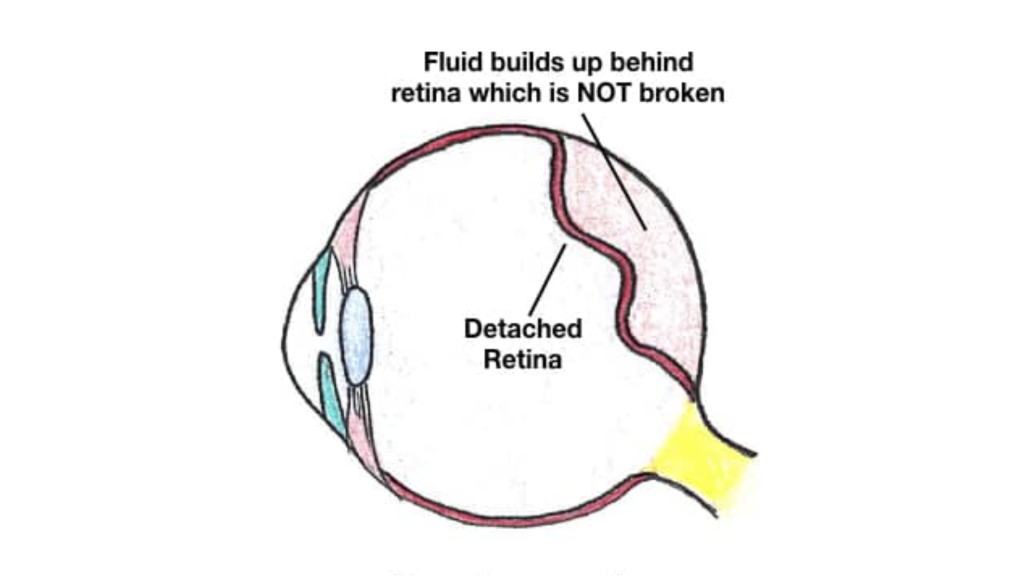
Exudative retinal detachment happens when fluid builds up behind your retina, but there aren’t any tears or breaks in your retina. If enough fluid gets trapped behind your retina, it can push your retina away from the back of your eye and cause it to detach.
What causes exudative retinal detachment?
The most common causes of exudative retinal detachment are leaking blood vessels or swelling in the back of the eye.
There are several things that can cause leaking blood vessels or swelling in your eye:
- Injury or trauma to your eye
- Age-related macular degeneration (AMD)
- Tumors in your eye
- Diseases that cause inflammation inside the eye
- Coats disease, a rare eye disorder